
Connecting Social Connections to Premises
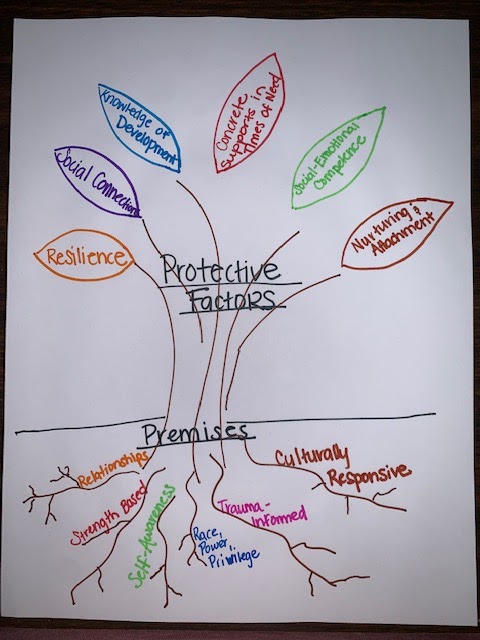
Guiding Premises are best practices for professionals to be able to embrace the concepts of the Protective Factors within their work. Families and young children are best supported by professionals who understand and recognize the importance of self-awareness and self-care in their own professional practice.
In other words, the way we can look at how these concepts are aligned is to think of the Protective Factors as the leaves on the tree and the Premises as the roots of the tree. This visual illustrates the connection on how the Premises lay the foundations for professionals to understand how to incorporate the Protective Factors into the work you are doing.
Factors that impact Social Connections
Relationships
Families seek timely assistance from people they have learned to count on and they feel empowered to “give back” through satisfying, mutually beneficial relationships. Constructive and supportive social connections help buffer caregivers from stressors and support nurturing parenting behaviors that promote secure attachments in young children.
Strength-based
Establishing positive connections with families will help them feel respected and appreciated in their role as a caregiver. Engagement and involvement improve when we focus on strengths first. This can also increase a person’s motivation to make necessary changes over time.
Self-awareness
Know who your positive supports are and realize not all social connections are positive. For example, try not to engage with a person you know can be negative first thing in the morning because this interaction could impact your mood.
Race, Privilege and Power
People engage in connections in different ways. Understanding that race, other identities, privilege and power shape your role as a professional and how you connect with the families you work with.
Trauma-informed
Allow time to build rapport before expecting families to feel comfortable sharing personal details about themselves or their child.
Culturally Responsive
Take into account your own culture when building connections with others. Having positive relationships that provide emotional, informational and spiritual support can help you to feel secure and confident in sharing the joys, pains and uncertainties that come with being a caregiver.