
Variable 4: Communicating Effectively with Peers
? Audio
Audio Transcript
A final variable essential to post-school success for students with significant disabilities is communicating effectively with peers
The ability to communicate is an essential outcome for all students.
And we have found that communication is directly related to post-school success for students with significant disabilities.
Yet here again, we find a performance gap for students with significant disabilities
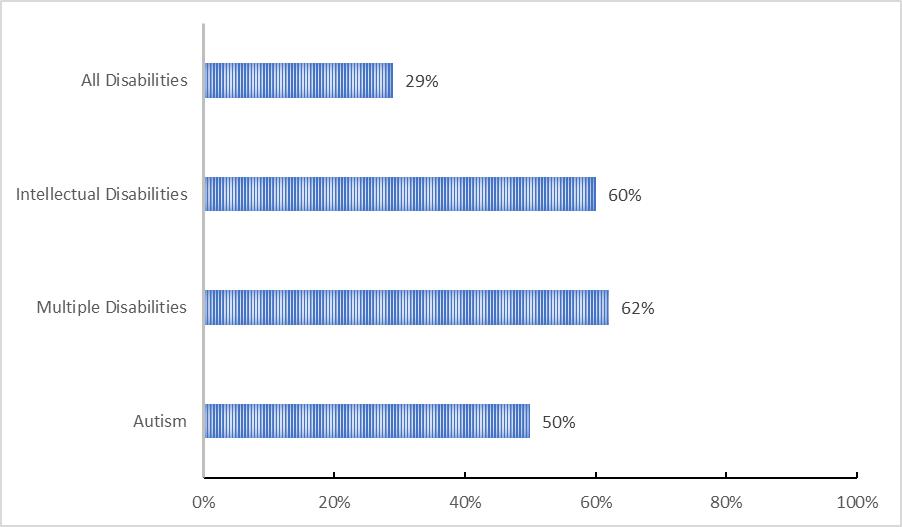
• For all youth with disabilities, only 29% had “trouble communicating by any means”. Yet:
• 60% of students with intellectual disabilities had trouble communicating
• 62% of students with multiple disabilities had trouble communicating
• And 50% of students with autism had trouble communicating.
Kentucky has a statewide project to address this disparity: Teaching Age-Appropriate Academics through Learning via Communication (TAALC): https://msd1stop.hdiuk.org/
TAALC (Teaching Age-Appropriate Academic Learning via Communication) is a Kentucky Department of Education Initiative, through our State Professional Development grant
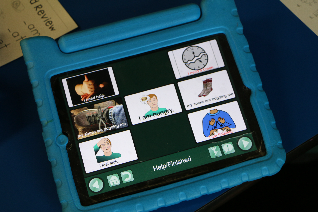
TAALC was designed to improve communication and educational services to students with the most significant disabilities in Kentucky public schools. The key principles of TAALC include:
With the innovations in technology, communication for students with significant disabilities is achievable.
NO student should leave school without a communication system in place, and yet we know nationally that approximately 10% of students who participate in their state alternate assessments don’t have a reliable mode of communication.
Students must have viable communication systems in order to access curriculum and participate in assessment systems, academic curriculum, social interactions, and post-school outcomes.
The Importance of a reliable mode of communication cannot be overestimated:
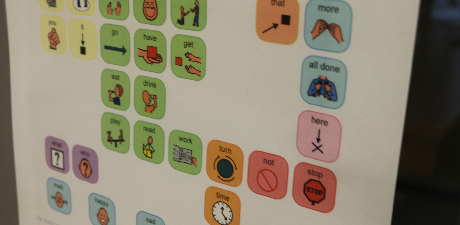
…If students leave school without a reliable and formal means of communication, we know that their life outcomes are uniformly poor.
…An essential piece of transition planning is to make sure all of our students have the capacity to express their needs, make choices, advocate for themselves, and communicate with their peers!
? The ability to communicate is an essential outcome for all students
Communication is directly related to post-school success for
students with significant disabilities (Kleinert et al., 2002)
For all youth with disabilities, only 29% had “trouble
communicating by any means”. Yet:
- 60% of students with intellectual
disabilities had trouble communicating - 62% of students with multiple disabilities had
trouble communicating - 50% of students with autism had trouble communicating.
Percentage of Students Who Have Difficulty Communicating
Source (NTLS2 data,
Lipscomb et al., 2017)
TAALC: A Kentucky Department of Education Initiative
A Statewide Project to address this disparity: Teaching Age-Appropriate Academics through Learning via Communication (TAALC): https://msd1stop.hdiuk.org/
Designed to improve communication and educational services
to students with the most significant disabilities in KY public schools, the
TAALC key principles are:
- With the innovations in technology,
communication for students with significant disabilities is achievable. - NO student should leave school without a communication system in place.
- Students must have viable communication systems
in order to access curriculum and participate in assessment systems, academic
curriculum, social interactions, and post-school outcomes.
The Importance of a Reliable Mode of Communication
If students leave school without a reliable and formal means
of communication, we know that their life outcomes are uniformly poor (Kleinert
et al., 2002).
An essential piece of transition planning is to make
sure all of our students have the capacity to express their needs, make choices,
advocate for themselves, and communicate with their peers!